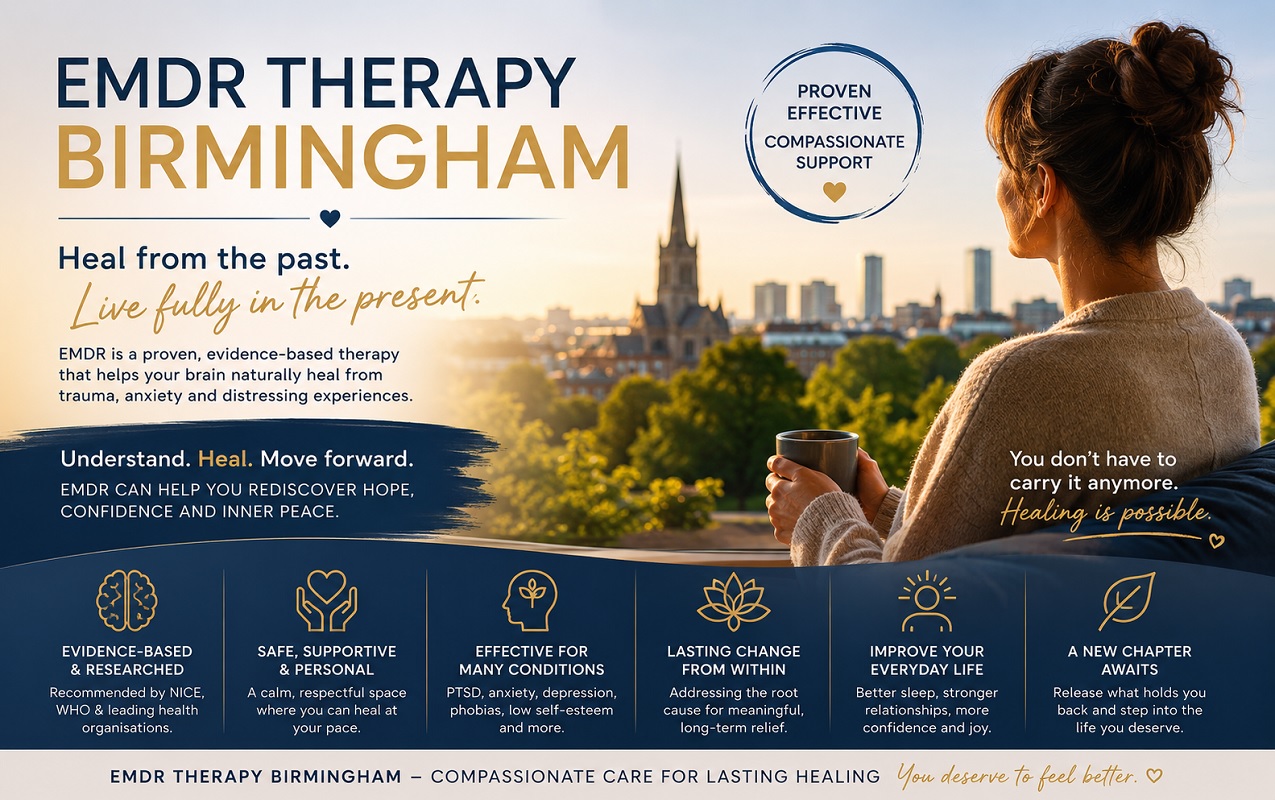

Rediscovering Hope through Evidence-Based Healing
Trauma leaves invisible wounds that can quietly reshape every part of a person’s life — affecting relationships, sleep, confidence, and even the ability to feel joy. Many people carry these wounds for years, not knowing that an effective, evidence-based solution exists. EMDR Therapy Birmingham offers a scientifically recognised path forward, helping individuals resolve deep-seated traumatic experiences and reclaim their mental and emotional wellbeing.
Unlike traditional talking therapies that rely solely on conscious reflection and verbal processing, EMDR works directly with the brain’s natural healing mechanisms to process distressing memories at their root. This makes it one of the most powerful and efficient therapeutic approaches available today for those living with trauma, PTSD, anxiety, and a range of other psychological difficulties.
What Is EMDR and How Does It Work?
Eye Movement Desensitisation and Reprocessing — better known as EMDR — is a structured therapeutic method that was developed in the late 1980s by psychologist Dr. Francine Shapiro. It has since grown into a globally recognised treatment, endorsed by leading health authorities including the World Health Organization (WHO) and the National Institute for Health and Care Excellence (NICE) in the UK.
At its core, EMDR operates on the principle that the human brain has an innate ability to heal psychological wounds, much like the body heals physical ones — but sometimes, traumatic experiences are so overwhelming that this natural process gets disrupted.
When a deeply distressing event occurs, the brain may be unable to process it normally. Instead of being filed away as a resolved memory, the experience becomes stored in a raw, unprocessed state — complete with the original sights, sounds, emotions, and bodily sensations.
Every time a person encounters something that resembles the original event — a sound, a smell, a situation — the brain retrieves that raw memory in full emotional force. This is why people with PTSD can feel as though they are reliving the trauma, rather than simply remembering it.
EMDR therapy interrupts this cycle by guiding clients to recall distressing memories while simultaneously engaging in bilateral sensory stimulation — most commonly, side-to-side eye movements guided by a therapist. This dual-attention process appears to activate the brain’s adaptive information processing system, allowing the memory to be reprocessed and stored in a more resolved, less distressing form.
The Eight-Phase Approach to Trauma Recovery
One of the defining features of EMDR is its structured, eight-phase treatment framework. This approach ensures that therapy is thorough, personalised, and carefully paced to suit each individual’s needs and readiness.
The phases include history taking and assessment, preparation and stabilisation, identifying and targeting specific traumatic memories, desensitisation through bilateral stimulation, installation of positive beliefs, body scan for residual tension, closure at the end of each session, and re-evaluation at the start of subsequent sessions.
This structured methodology sets EMDR apart from less formalised therapeutic approaches. Rather than jumping straight into traumatic content before a client is ready, the preparation phase ensures that every individual has the coping strategies and emotional resilience needed to engage with difficult memories safely.
The therapist works collaboratively with the client throughout, creating a calm, supportive environment where healing can take place at a manageable pace. This level of care and precision is what makes EMDR not just effective, but also safe and well-tolerated by the vast majority of clients.
Conditions That Respond Well to EMDR
While EMDR was originally developed to treat Post-Traumatic Stress Disorder, its clinical application has expanded significantly over the decades. Research and clinical experience have demonstrated that EMDR is highly effective for a broad range of psychological difficulties, most of which trace their roots back to past traumatic or distressing experiences.
PTSD remains the most well-documented application, with multiple large-scale studies confirming that EMDR produces significant symptom reduction — often in far fewer sessions than conventional therapies. However, the therapy also demonstrates excellent results for:
- Depression rooted in past negative experiences or unresolved grief
- Panic attacks and chronic anxiety disorders
- Performance anxiety in professional, academic, or social settings
- Specific phobias and fears linked to past negative experiences
- Low self-esteem and negative core beliefs formed in childhood
- Grief and attachment issues, including difficulties forming healthy, lasting relationships
- Childhood trauma, including experiences of neglect, abuse, bullying, or prolonged emotional distress
This breadth of application means that EMDR is not just for those who have survived obvious, single-event traumas like accidents or natural disasters. It is equally powerful for those carrying the quieter, long-term weight of emotional neglect, difficult childhood environments, or repeated exposure to distressing situations.
Why Birmingham Residents Are Choosing EMDR
Across Birmingham, more and more people are turning away from approaches that have left them stuck and seeking something that truly works at a deeper level. EMDR Therapy Birmingham is meeting that need by providing professional, compassionate EMDR treatment in a comfortable, welcoming setting in Edgbaston — one of Birmingham’s most accessible and well-connected neighbourhoods. Clients receive consistent support throughout every stage of their treatment, with therapists who understand the personal and cultural nuances of those living in and around the city.
What makes EMDR particularly appealing to Birmingham residents is its efficiency. Many clients notice meaningful change within a relatively small number of sessions, which is especially significant for those who have previously undergone years of therapy with limited results.
Because EMDR addresses the underlying processed memory rather than just managing surface-level symptoms, the changes it produces tend to be lasting. Clients frequently report feeling as though a weight they had carried for years has finally been lifted — not suppressed, but genuinely resolved.
The Reported Benefits of EMDR Therapy
The benefits that clients experience following EMDR therapy are both wide-ranging and deeply impactful. Rather than simply reducing the most acute symptoms of trauma, EMDR tends to create a more comprehensive shift in how a person relates to their past and navigates their present life.
Reported benefits from clients who have undergone EMDR include:
- A significant reduction in re-experiencing traumatic memories through flashbacks, intrusive thoughts, or nightmares
- Greater ability to manage trauma-related triggers without feeling overwhelmed or needing to avoid everyday situations
- Improved capacity for enjoyment and connection — being able to engage with pleasurable activities, relationships, and social life without constant emotional interference
- Reduced stress, anxiety, and hypervigilance, allowing for restful sleep and a calmer daily experience
- Decreased feelings of isolation, hopelessness, and depression, with many clients reporting a renewed sense of purpose
- A genuine boost in self-confidence and self-esteem, often in areas that have been affected by negative beliefs formed in the wake of trauma
These outcomes are not merely subjective reports — they are consistent with findings across decades of clinical research and are part of why EMDR has earned endorsement from the world’s leading health organisations.
What to Expect During Your First Session
For many people, the idea of beginning trauma therapy can feel daunting — particularly when past therapy experiences have not delivered the results they hoped for. Understanding what to expect from the outset can make a significant difference to a client’s comfort and confidence.
In the early phases of EMDR, sessions are largely focused on building a trusting therapeutic relationship, gathering relevant history, and equipping the client with practical tools for emotional regulation. There is no pressure to dive into detailed accounts of traumatic events before a client feels truly ready.
The therapist’s role is to guide the process with expertise and sensitivity, ensuring that each session ends with the client in a stable, grounded state. Birmingham-based EMDR practitioners are trained to create an environment that feels safe, calm, and entirely non-judgmental. Many clients are surprised to find that the process feels less overwhelming than they anticipated — and that even early sessions can bring a sense of relief and movement.
Taking the First Step towards Lasting Change
Living with unresolved trauma is not simply a matter of having bad memories — it is an ongoing condition that can affect every dimension of daily life, from how a person feels when they wake up in the morning to how they relate to the people they love. The good news is that the brain is capable of healing, and with the right support, that healing can happen faster than most people expect.
EMDR Therapy Birmingham uses a fully natural process — one that relies entirely on the mind’s own built-in capacity to reset and rebalance — to provide genuine, lasting relief from PTSD, trauma, anxiety, depression, and much more. For anyone in Birmingham who is ready to stop managing symptoms and start truly recovering, EMDR represents not just a treatment, but a turning point.